Space Nova Location in District 14/19: How Official Pages Describe It
If you have been tracking Space Nova, you will notice something that can feel oddly specific and also slightly confusing at first glance. The official information consistently anchors the project to a real street address, yet different official pages (and different listings that echo them) may describe the location using district numbers like District 14/19, while also calling out a precinct such as Tai Seng / Bartley. For buyers, that mismatch is not just trivia. It affects how you interpret connectivity, the “feel” of the surrounding industrial neighbourhood, and even how you explain the project to tenants or partners.
This article breaks down exactly how the official materials describe Space Nova’s location, what is consistent across the pages, and what you should pay attention to when you are comparing “District 14/19” language with “Tai Seng / Bartley” language.
The one detail that does not move: the address
Across the official materials, the address is stable: Space Nova is at 21 New Industrial Road, Singapore 536208. That matters because the address acts as the ground truth when district labelling gets interpreted differently on different webpages, print versions, or third party reprints.
When people say “Space Nova is in District 14/19,” they are not changing the physical site. They are changing the way the project is categorized for map views, marketing copy, or buyer searches. In practice, you can treat District 14/19 as a useful administrative shorthand, while the street address is the reliable reference point you can verify immediately on any map app, vehicle navigation, or on foot route planning.
The reason I like starting with the address is simple: industrial units are about logistics first. A driver or tenant usually cares about where the loading bays are, where the access points line up, and how quickly you can reach other industrial clusters. A district label can guide expectations, but the address tells you where the ramp-up access and loading/unloading routes actually connect.
District 14/19 versus precinct naming: why both appear
The official pages describe Space Nova as being in the Tai Seng / Bartley precinct in some places, and as being in District 14/19 in others. Both can be true without contradicting each other, because precinct names and district numbers are just different layers of geographic description.
A precinct like Tai Seng / Bartley is typically a neighbourhood framing used in real estate marketing and local context. It gives you a sense of the industrial character around the site, and it is often how buyers describe the area in conversation. District 14/19 is a more formal administrative classification.
So when you are reading Space Nova location statements, you can approach them like this:
- District 14/19 is an administrative locator.
- Tai Seng / Bartley is a precinct style locator.
The official site’s decision to use both styles is not unusual for Singapore property marketing. The more important part is that the address stays consistent, and the site plan, floor plans, and unit information clearly tie the project to the same physical location.
How the official site’s “location” language affects your interpretation
The practical effect of “District 14/19” versus “Tai Seng / Bartley” shows up when you start planning a viewing appointment, deciding on tenant fit, or even just checking whether the area matches the type of industrial business you are supporting.
Tai Seng and Bartley are often discussed as established industrial neighbourhoods. That kind of framing tends to help buyers who already understand the region. When Space Nova’s official pages refer to the Tai Seng / Bartley precinct, they are likely speaking to that familiarity, especially for tenants looking for practical warehouse-adjacent environments rather than a brand new out-of-the-way location.
District 14/19, on the other hand, can be more useful for:
- buyers running their shortlist using district filters,
- those comparing School planning catchments for staff convenience (even though this is industrial space, staff often influences operations),
- and those who want a more standardized geography for due diligence.
In other words, precinct language helps you picture the “industrial feel.” District language helps you screen fast. In the Space Nova case, the official materials give you both, but they keep the anchor fixed at 21 New Industrial Road.
What the official address implies for an industrial buyer
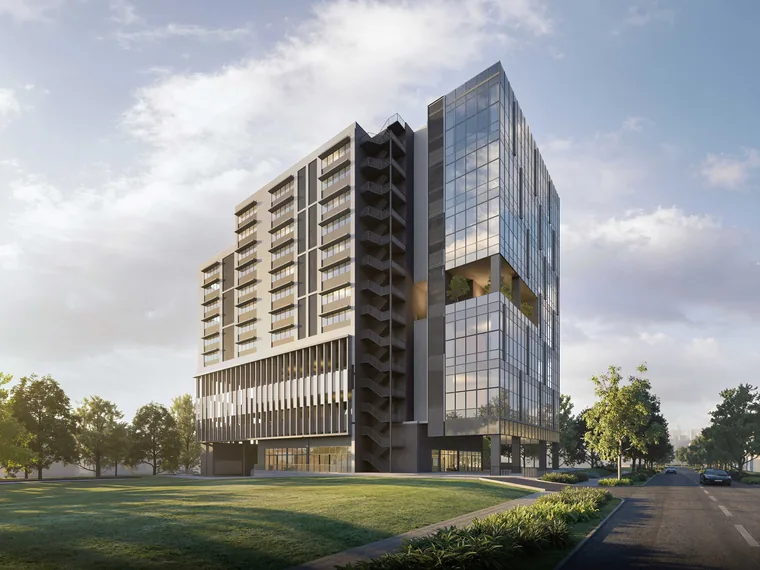
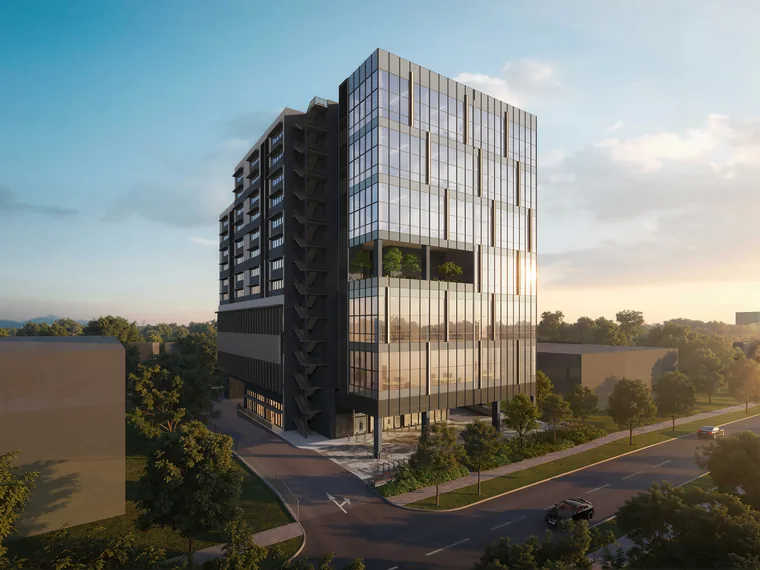
Space Nova is described as a freehold B1 (clean) industrial development, and it sits at that specific address on New Industrial Road. That B1 (clean) designation matters because it signals operational expectations. It is a clue about the type of industrial activities that the property is generally aligned with, even if the exact use permissions still require due diligence for your specific business.
From a buyer’s perspective, B1 (clean) industrial space plus a New Industrial Road address usually points to a neighbourhood where road access, loading patterns, and operational circulation have already shaped how properties are designed. That is also why the official site plan and floor plan pages are so important. They show how the project’s internal logistics are laid out relative to the site.
Even without inventing anything beyond the official materials, you can see the buyer logic: the location description only becomes fully meaningful when paired with the actual site plan and the ramp-up and loading/unloading arrangements inside the project.
What official pages say about the project’s physical layout (and why it matters for “location”)
One reason location statements feel like they “move around” is that buyers often use location as a proxy for build intent. If a project’s official pages talk about sky terraces, ramps, loading zones, lifts, and ingress/egress, you begin to evaluate the location through the lens of usability.
On the official floor plan information, the pages describe how:
- lower floors include ramp-up and loading/unloading access,
- and Level 4 includes a communal sky terrace.
That is not just architectural detail. It changes how you understand daily movement patterns on site, especially if your tenant operations depend on scheduled deliveries, inter-floor movement, or staff routing.
Meanwhile, the official site plan page lists operational elements at the site level, including ground-floor units, drop-off, passenger and service lifts, bicycle parking, EV charging lots, loading/unloading bays, letterbox, bin centre, MCST office, electrical substations, and vehicular ingress/egress.
When you read “District 14/19” and “Tai Seng / Bartley” side by side, these site-level details help you translate the label into reality. The address tells you where you are. The site plan tells you how the project behaves.
A quick check on the official project identity (so the location context is complete)
Location language is only one layer. To keep the context clean, it helps to confirm how the official pages describe the project identity, because that identity tends to appear alongside location in marketing materials.
Space Nova is described by the official materials as:
- developed by JVA NIR Pte Ltd,
- comprising 47 strata units across 7 storeys,
- and supported by official project pages that include a video tour/gallery, pricing page, balance-units chart, and showflat/private viewing appointment page.
The official e-brochure is also described as covering floor plans, unit strata areas, a distribution chart, technical specifications, facilities, and connectivity information, and it is available in English and Chinese.
This matters because when you request “project details” or check “Space Nova official site” pages, you are usually not just looking at location text. You are pulling together the same official system of information, where location is one piece of a larger decision.
Where “new launch” expectations change what you should look for
The phrase “Space Nova new launch” shows up naturally in buyer behaviour, even if you are not using it as a search keyword. With a new industrial development, location description often becomes a stand-in for things people are still trying to learn:
- how quickly the area is likely to develop,
- how the industrial streetscape will support deliveries,
- and whether the project’s design choices align with expected tenant workflows.
Because the official materials include floor plans and a site plan, you do not have to guess how the project is meant to run. You can judge whether its internal logistics match your operations. A location label alone cannot do that work, but it guides what you should verify in those plan pages.
If you are reading the official “Space Nova project details” content and you see “District 14/19,” make sure you also open the floor plan and site plan sections. Those plan pages are where the location becomes operationally real.
How to interpret “balance-units” when location is part of the story
The official site includes a balance-units chart page, and it notes that unit availability changes frequently while showing remaining units by floor and type. This is relevant to location because buyers who are serious about a specific district or precinct often act fast once they identify a project that matches their location requirements.
Even if you are not ready to buy, the balance-units view can tell you which storeys are still available at a given time. That can influence how people interpret the location in practice. For instance, if ramp-up and loading/unloading access is concentrated on certain lower floors, availability patterns on those floors can affect your operational planning and tenant discussions.
I would not treat balance-units as a substitute for due diligence, but it is useful when you want to align your timeline with the project’s actual remaining inventory.
Space Nova floor plans: the location translated into movement and access
Official floor plan pages describe operational differences across levels. In particular:
- lower floors include ramp-up and loading/unloading access,
- Level 4 includes a communal sky terrace.
Those details help you connect location language to how the project works day to day. If you are in the “Space Nova location” research stage, it is tempting to focus on maps and district numbers. But for an industrial strata product, the more meaningful question is how the site supports movement between loading, circulation, and tenant space.
A communal sky terrace on Level 4 also changes the “lived experience” of the development for staff and visitors. It suggests a shared amenity space rather than purely utilitarian floors. That can matter when you are thinking about who will be on site and how the building supports not just goods flow but people flow too.
Sales gallery, video tour, and the way official pages help you confirm location
The official site includes a video tour/gallery and a sales gallery component through its broader page structure, alongside pricing and appointment pages. When official pages include visual content, it is often because buyers want a faster confirmation that the project’s frontage, access points, and overall layout align with their understanding of the area.
This is where District 14/19 wording can sometimes feel “paper based.” The visual tour helps you treat location as something physical. You confirm how the road frontage feels, whether the drop-off flow is what you expect, and how the building sits within the immediate industrial streetscape around 21 New Industrial Road.
For many buyers, that is the real bridge between “District 14/19” and “Tai Seng / Bartley.” The textual labels can be processed quickly, but the visuals let you validate your own mental map.
Pricing pages: where location and unit choice influence the deal range
Official pricing content is paired with unit selection mechanics. The official pages and third-party listings indicate indicative starting prices in the low-$2 million range and PSFs roughly in the mid-$1,000s to low-$2,000s, varying by unit and floor.
It is worth stating plainly: pricing will vary by unit type and storey, and those factors often correlate with practical differences like floor access and internal layout. So when you see “Space Nova pricing” information alongside “Space Nova location” details, they are not separate conversations. They are connected through how the project’s design works across levels.
If you are using District 14/19 or the Tai Seng / Bartley precinct as your filter, you are also implicitly filtering for certain unit types that might be more attractive to certain tenants. Those tenants often have different operational needs that align better with certain floors or configurations.
A small reality check on “recent transactions”
You may come across “Space Nova recent transactions” style content in search results. However, the verified context available here indicates that some transaction references found were for nearby New Industrial Road industrial properties generally, not clearly for Space Nova specifically.
That distinction matters. When you compare price discovery, you want the closest possible comp set. For your decision, treat general New Industrial Road transaction info as a contextual benchmark, not a direct substitute for Space Nova’s own unit-by-unit pricing and availability.
In other words, do not use generic “nearby” transaction claims as your only signal when Space Nova’s own official pricing pages and balance-units chart provide more direct project-specific guidance.
What to do when you see multiple “location descriptions” on official pages
Here is the approach that has saved me time in more than one industrial project briefing: treat the official address as the primary fact, treat district labels as a search and screening helper, and treat precinct names as the neighbourhood shorthand.
When you do that, you can compare pages without getting stuck in the wording.
To make that workflow practical, here are the official items on the Space Nova site that most directly support location interpretation, not just marketing slogans:
- The e-brochure, which includes floor plans, unit strata areas, technical specifications, facilities, and connectivity information
- The floor plan page, which describes how lower floors include ramp-up and loading/unloading access, and Level 4 includes a communal sky terrace
- The site plan page, which lists ground-floor units, lifts, bicycle parking, EV charging lots, loading/unloading bays, and vehicular ingress/egress
- The pricing page, which presents indicative ranges varying by unit and floor
- The balance-units chart, which shows remaining units by floor and type and notes availability can change frequently
That set of pages turns “District 14/19” and “Tai Seng / Bartley” from competing descriptions into complementary context.
Why the “District 14/19” label is still useful, even if you prefer precinct framing
Some buyers prefer precinct https://space-nova.com.sg/ framing because it feels more human and immediately comparable to how tenants talk. Others prefer district numbers because they map neatly into filters and administrative categories.
For Space Nova specifically, you can hold both preferences without losing accuracy:
- Use 21 New Industrial Road as your anchor for everything factual.
- Use District 14/19 when you are screening and comparing across districts.
- Use Tai Seng / Bartley when you are trying to describe the area’s industrial identity in plain language.
That is the trade-off: district labels are neat for search, precinct names are better for intuition. The official pages giving you both reflects that same trade-off. The product is one project, but buyer needs vary.
Book a viewing, but come prepared with the right questions about access
The official site includes a book viewing appointment page for showflat/private viewing. For an industrial buyer, the viewing is not only about aesthetics. It is about verifying how the building’s described access features play out in reality, especially when your initial research included both District 14/19 and Tai Seng / Bartley language.
When you are at the viewing, you want to tie what you read on the site plan and floor plans to what you physically observe at the address.
You should expect to talk through how loading/unloading routes work, how ramp-up access is used, and how the project supports vehicular ingress and egress, since those are explicitly listed on the official site plan. If your business depends on deliveries and timely movement, these are not “nice-to-know” points. They are decision points.
The bottom line: location description is a map overlay, not the property
Space Nova’s official materials can describe the project as being in District 14/19, and they can also describe it in the Tai Seng / Bartley precinct. For buyers, that can look inconsistent until you remember that both are simply different ways of labeling the same physical place.
The stable anchor remains 21 New Industrial Road, Singapore 536208. Once you treat district and precinct language as overlays, you can move on to what actually matters for an industrial strata product: the ramp-up and loading/unloading access described on the floor plan pages, the lifts and loading/unloading bays listed on the site plan, and the unit availability and pricing ranges shown on the official pricing and balance-units pages.
That is how the official site effectively does what a good new launch site should do. It gives you location context in multiple formats, then backs it with plan-level details that let you evaluate the building as a working facility, not just a point on a district map.